
Milanese Ceremonial Two-Handed Greatsword
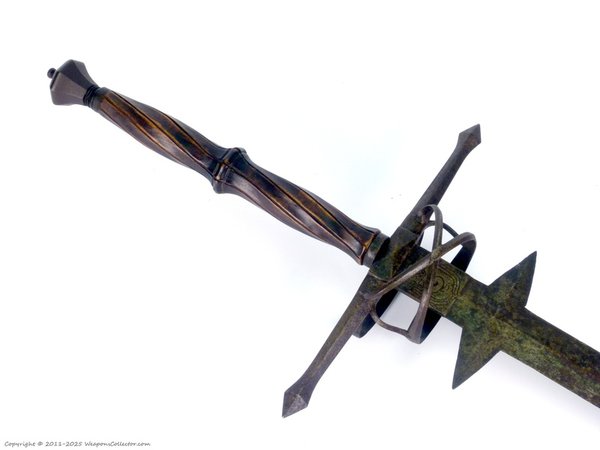
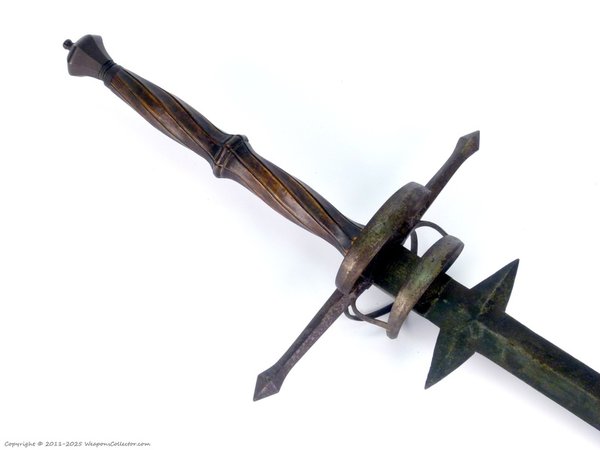
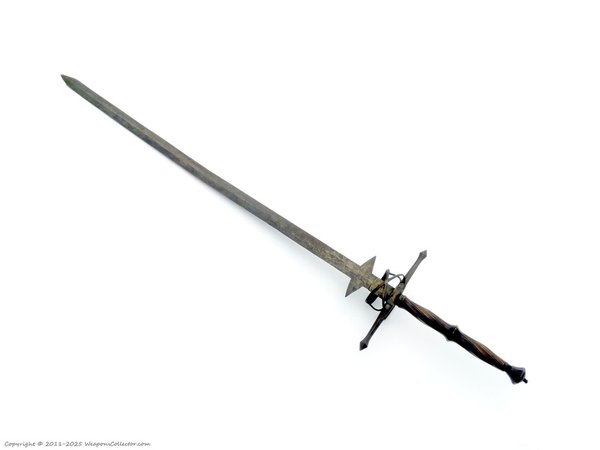
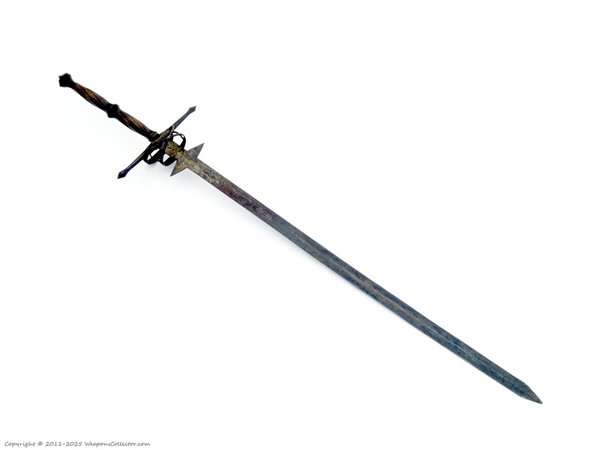
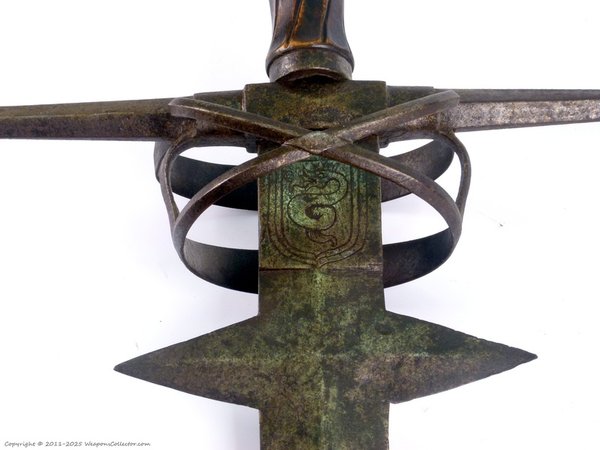
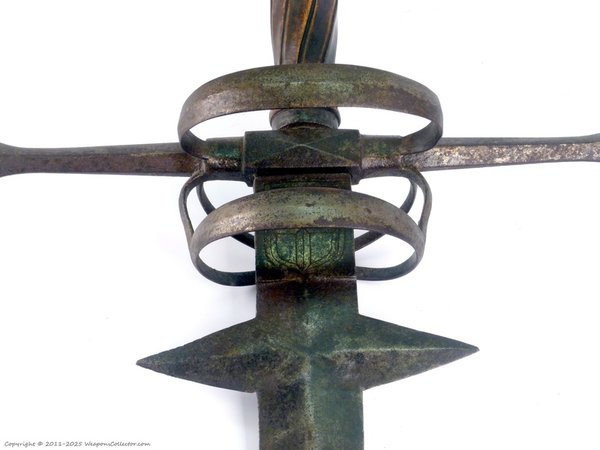
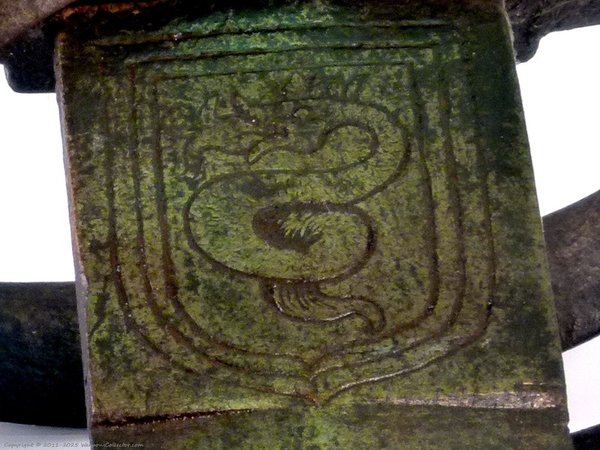
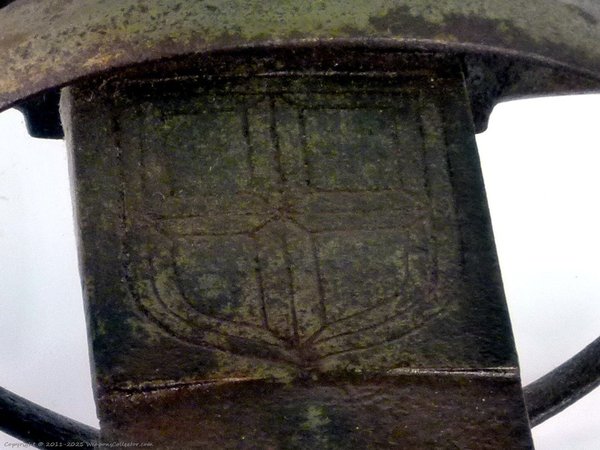
A well-crafted ceremonial two-handed sword (spadone a due mani) featuring elaborate heraldic decorations. The blade bears significant Milanese heraldic elements: the Visconti family's Biscione — a serpent appearing to swallow a human figure — on one side and the Cross of St. Ambrose, Milan's coat of arms, on the other. The sword exhibits ceremonial rather than combat characteristics, with vestigially-placed flukes near the unsharpened ricasso and a spiral wood grip.
From Combat to Ceremony
This sword represents the evolution of the two-handed sword from a combat weapon to a ceremonial and guard weapon. Originally used by German and Swiss landsknecht troops — specifically by doppelsöldners, specialized swordsmen who fought in front lines against pike formations — combat versions were largely discontinued by the mid-16th century. The form then evolved into ceremonial and guard weapons, particularly in Milan. The pommel's truncated cone with longitudinal flutes matches examples documented in A.V.B. Norman's “Rapier and Smallsword” (1980, p.257, #38).
Provenance
F.E. Williams purchased this sword from Joe Kindig Jr. in the late 1950s or early 1960s. It was on display at Williams' Museum of Antique Weapons in St. Augustine for more than two decades.
| Type: | Spadone a due mani |
| Maker: | Unknown (Milanese) |
| Date: | c1750-1825 |
| Overall Length: | 63 inches |
| Blade Length: | 48 inches |
| Weight: | 5 lb (approx.) |
References
- p.257, #38 Norman, A.V.B. “Rapier and Smallsword” (1980)