
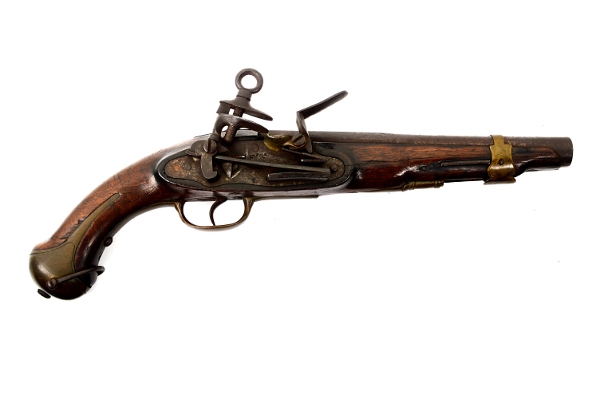
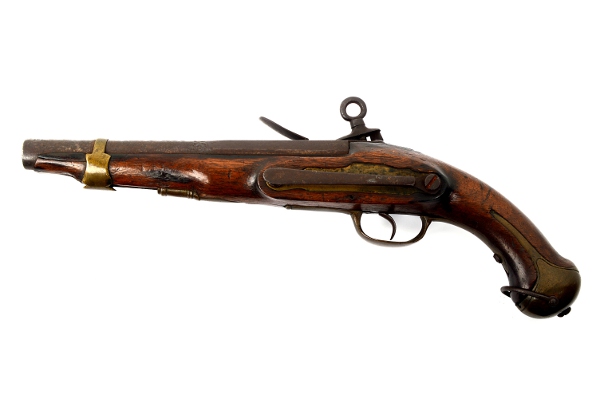
Spanish Cavalry Pistol with Patilla Style Miquelet Lock, c1808
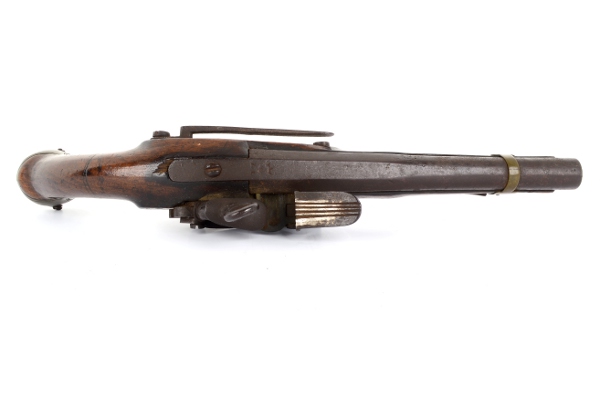
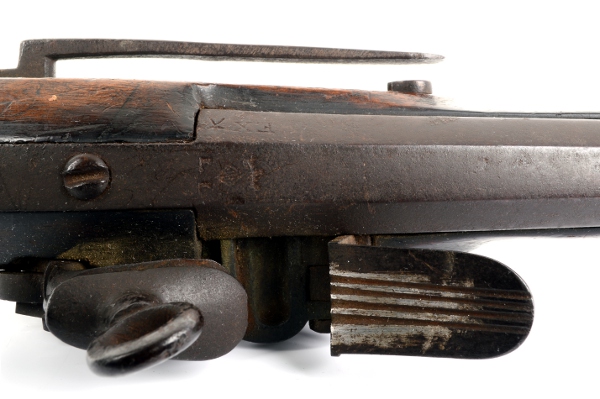
This Spanish cavalryman's pistol dates from the Spanish War of Independence (1808-1814) (1). It may have been used in East Florida during the second Spanish period (1783-1821), or in the Mexican War of Independence (1810-1821). Belt pistols have a large hook attached to their side or screw plate. They could be easily hung from a belt, saddle or sash. This pistol also has a lanyard loop on its butt cap. Tethered weapons were considered essential for cavalrymen and sailors.
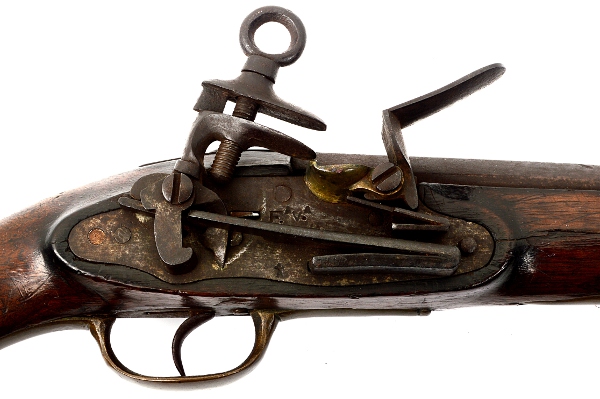
In 1791, Spanish military authorities directed that firearm manufacturers return to the use of the patilla style miquelet lock. A French style lock had been adopted in 1752, but it proved to be too fragile for heavy use (2). Patilla style miquelet locks have a large external main spring. The spring exerts an upward force on the hammer's heel. Two horizontal sears pass through the lock plate in front of the hammer. The lower one is the half cock sear. It locks the hammer's toe in a safe position for loading and carrying the weapon. The upper one is the full cock sear. It prevents the hammer from falling until the trigger is pulled. The earliest known examples of this style are Spanish and date from the late 16th century (3). This pistol was manufactured at the Valencia Armory between 1808 and 1812. The lock is marked "Fa.Va." (Fabrica de Valencia). The barrel is marked with Valencia's coat of arms, a crowned rhombus with vertical lines, and with "L.L" which means doubly loyal (doblemente leal) (1).
| Type: | Belt Pistol |
| Style: | Miquelet, Patilla |
| Country: | Spain, Valencia |
| Overall Length: | 15 1/2 inches |
| Barrel Length: | 9 inches |
| Weight: | 2lb, 12 5/8oz |
| Bore Diameter: | .685 inches, Smooth |
| Stock: | Fruitwood, Ball & Cheek |
References
- Pages 65 and 68. Armamento Espanol en la Guerra de Independencia (Spanish Armament in the War of Independence) by Juan L. Calvo (2008)
- Page 31. Spanish Military Weapons in Colonial America 1700-1821 by Sidney B. Brinckerhoff & Pierce A. Chamberlain (1972)
- The Spanish Lock, Page 157, 158, 166 and 184. A History of Spanish Firearms by Dr. James D. Lavin (1965)