
Spanish Colonial Cup Hilt Sword
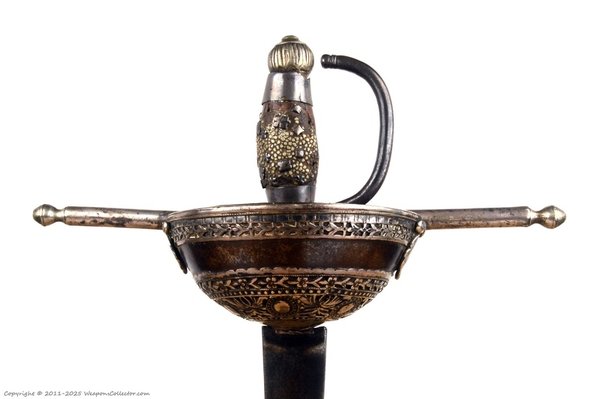
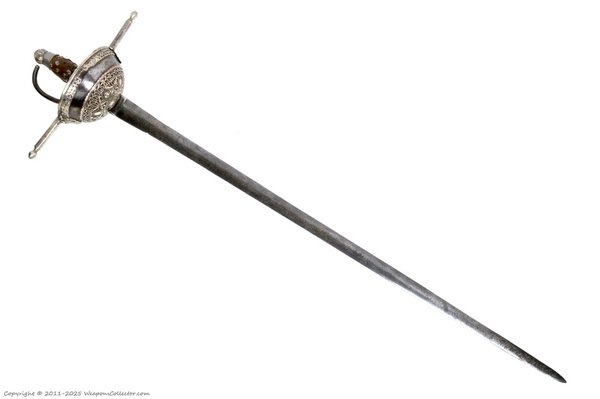
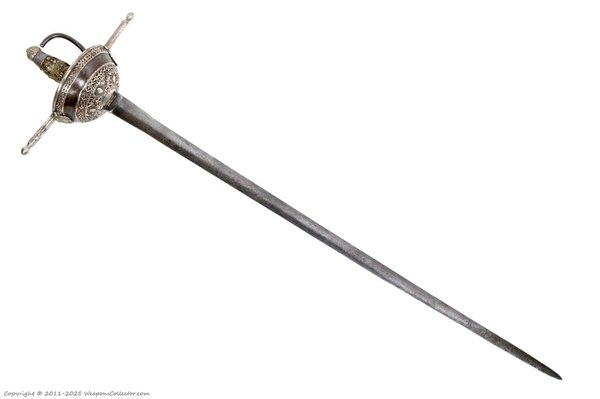
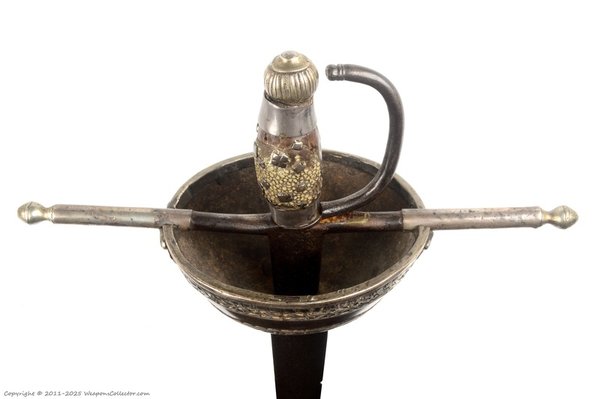
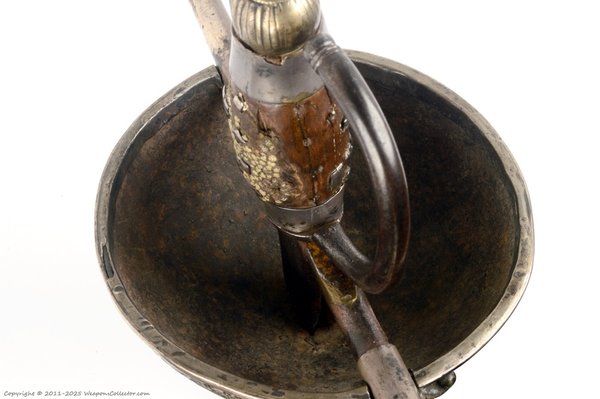
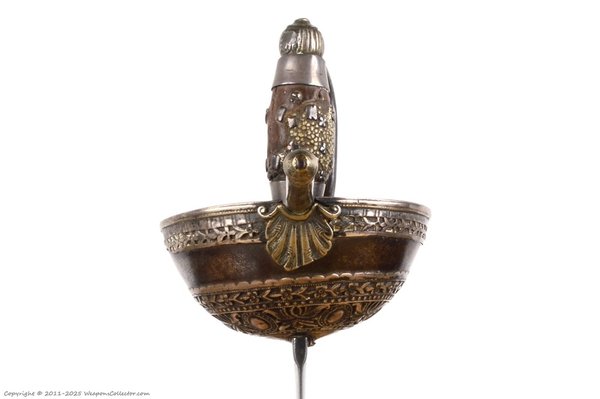
A Spanish Colonial cup-hilt sword featuring distinctive characteristics of colonial manufacture, including a broader blade than European examples and modified hilt construction. The hilt assembly features an ornate iron cup guard with detailed silver fretwork arranged in geometric patterns and floral motifs, complemented by straight quillons terminating in silver-covered finials. The grip shows intricate silver nail work set against dark shagreen (tanned leather with embedded seeds). Notable for its combination of imported blade technology with colonial craftsmanship, this piece represents a unique adaptation of European sword designs in the colonial context.
A Colonial Tradition
The sword's origin is attributed to 18th-century colonial manufacture in the Caribbean or Spanish Americas, with a possible Solingen blade. One oral tradition links the sword to Georges Biassou, a former slave who became a leader in the 1791 Haitian Revolution and later fought alongside Spanish royalists against French revolutionary forces in colonial Haiti. Biassou reportedly relocated to St. Augustine in 1795.
| Type: | Cup-hilt sword (Spanish Colonial) |
| Maker: | Unknown (Caribbean / Spanish Americas) |
| Date: | 18th century |
| Overall Length: | 38 1/2 inches |
| Blade Length: | 32 inches |
| Weight: | 3 lb 2 1/4 oz |
References
- Brinckerhoff & Chamberlain, 1972 “Spanish Military Weapons of Colonial America”